

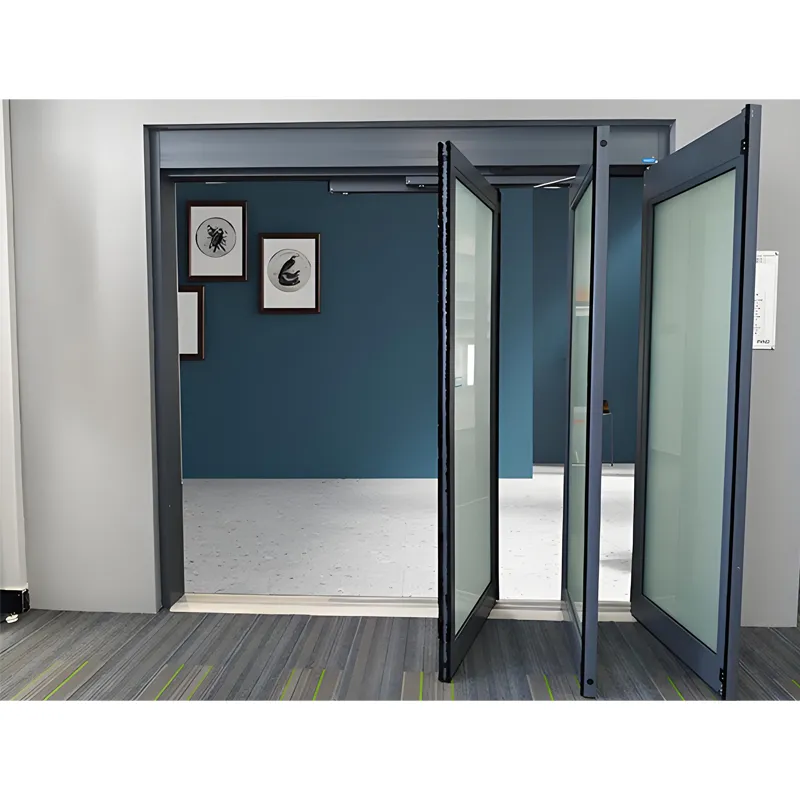
The world of automatic doors in regard to an international project might appear to be an intricate maze of rules and certifications. To the architects, contractors and developers, having knowledge about these standards is not all about standards compliance, but also about safety, ease of access and easy market entry. This guide separates the major considerations when specifying the automatic doors in accordance with the global demands.
Demystifying CE, UL and Other Regional Compliance Marks
The alphabet soup of certification marks may confuse when choosing automatic door systems to be used in various projects on various continents. Every mark signifies a passport to your project in a given area and the key to successful specification is to know what these marks are all about.
CE Mark is a conformity mark that is mandatory on products to be sold in the European Economic Area. It shows that a product is of high safety, health and environmental protection standards as stipulated by EU laws. In the case of automatic doors this means that they must meet the Machinery Directive as well as harmonized standards relating to safety and performance. A door system that carries CE mark has gone through stringent evaluation to make sure that it is a safe door to the users.
Underwriters Laboratories UL mark is one of the widely known safety certification marks in North America. An automatic door system that is UL listed has undergone testing and validation to certain U.S and Canadian safety standards, and usually dwells on electrical safety and fire resistance. This gives the assurance that the product is in line with the strict codes that the local authorities have set.
In addition to these, other areas have their needs including KC Mark of South Korea or CCC Mark of China. By indicating automatic doors of such a manufacturer as Suzhou Oredy Intelligent Door Control Co., Ltd. which actively pursues such various international certifications, facilitates the process of approving your projects worldwide. It shows a quality devotion and understanding of local legalities and frameworks so that the doors systems would be pre-certified to your target market.
Ensuring Your Project Meets Global Accessibility Requirements
Automatic doors are not just a luxury, but an essential element of an inclusive and accessible built environment. Various nations have developed elaborate accessibility codes in a bid to provide equal access to all humans including the disabled. The incorporation of compliant doors in the design is a basic design requirement.
The Americans with Disabilities Act (ADA) of the United States includes the specifications of the door opening force, the clear width, and the duration of the automatic doors. Beyond the same motives in the European Union, broader accessibility objectives and building codes of the country tend to refer to such standards as EN 16005 on the safety of power operated doors. These standards are aimed at ensuring that these individuals on wheelchairs, walkers, and the sightless are not hindered.
When designing a building, it is prudent to consider more than the minimum legal requirements in ensuring a future-proof building design. When choosing automatic door systems, make sure that one of the major principles is that the door must be designed based on the principle of universal accessibility, which means that your project will be inclusive to all. This would entail taking into account such aspects as sensor technology that will accurately detect slow or stagnant persons, and smooth and controlled movement that will permit safe movement. With the help of a manufacturer that is dedicated to these values, you will be able to provide projects that are not only compliant but also socially responsible and user-centric on a global level.
How Certified Products Mitigate Legal and Safety Risks
One of the most effective methods of mitigation of project risk is to select automatic door systems that bear the appropriate international certifications and compliance marks. This active practice safeguards against a variety of possible legal, economic, as well as safety-related concerns.
Legally and liability-wise, the placement of a non-compliant door system may be disastrous. When an accident or injury occurs, certification evidence is one of the main pieces of evidence to prove that you, as the specifier or installer, made due diligence in relation to the choice of a product that is known to comply with recognized safety standards. On the other hand, the use of uncertified product may put all the parties at risk of litigation, huge financial fines and nullified insurance claims. It is a failure in the essential element of the duty of care.
Moreover, certified products minimize safety risks to a large extent. The certification procedure entails intensive hazard testing on factors like entrapment, excessive closing force and failure during emergency cases. A door which is CE, UL, or other regional standards compliant has been designed with safety in mind such as sensitive leading edges and dependable fail-safe actions. This directly translates to the establishment of a safe environment to the populace and occupants of the building as well as the maintenance staff.
To international suppliers such as Suzhou Oredy Intelligent Door Control Co., Ltd., a strong range of worldwide certifications is not only a selling point; it is also an element in their production philosophy. It is an indication that you are investing in engineering quality and that you are willing to offer solutions that will safeguard not only the end-user, but also the reputation of your project. Your demand to have the automatically doors duly certified is a move of strategic choice that would protect your investment and put human safety first.
